
How to Navigate New Year’s Resolutions While in Recovery from an Eating Disorder
Blog Post by Contributing Editor Jacquelyn LaRusso, MS, LPC

‘Tis the season for New Year’s resolutions, which often lead you, as a person recovering from an eating disorder, to feel overwhelmed, lost, and in need of direction. I’m here, as a clinical therapist dedicated to treating eating disorders and in recovery myself, to help hold your hand through this vulnerable time and guide you toward what you truly value instead of getting lost in your eating disorder.
Whether you’re solid in recovery, early in recovery, or just on the verge of recognizing you have an eating disorder, New Year’s resolutions can be challenging to make. However, with some awareness and inner work, you can make New Year’s intentions that lead to growth in line with your authentic self instead of getting tangled with the eating disordered parts that are still healing.
A few reasons why New Year’s resolution time can be hard when in recovery:
You just had a season of holidays that can be stressful. Whether it be planning, nostalgia of past pains, traveling, gifts, hosting, feeling alone, and/or the festivities centered around food.
In the time directly following the holidays, you are inundated with advertisements on social media, public transit, and news apps targeting “new year, new you” everywhere. Diet and Wellness culture companies are targeting you. They know you are prey for the profit of their plans to change you, yet in ways that inevitably lead you to feel like a failure.
The comments you can’t seem to escape. People feeling “bad” for how they eat when enjoying holiday meals, and well-intended yet often hurtful remarks by loved ones about your body, what you look like, or a lack of acknowledgment of how hard these times can be for you.
So, take a minute to have compassion for yourself.
Kristen Neff, the leading researcher in self-compassion, finds the best steps we can take to practice self-compassion are the following:
Mindfulness of the emotion (versus ignoring or overidentifying with it). Name what you’re feeling with “I’m feeling ___.” For example, instead of, “I’m so bad/gross/etc.,” try, “I’m feeling bad/gross/etc.”
Common humanity (instead of isolation or shame). Recognize that what you’re feeling and experiencing is part of being human. For example, instead of, “Gosh, I’m the only one who deals with this; I’m so alone,” try, “This feeling and experience is part of what makes me human.”
Self-care (instead of self-harm). When we struggle, it’s important to be extra kind and loving to ourselves. For example, instead of restricting when you feel a difficult emotion, use this as an opportunity to do the opposite action and eat, and spend your time that day trying to be very gentle with yourself. How? Many ways. Feel lost? I’m happy to share some skills I find helpful.
Self-soothing skills to try if you feel lost:
Change your space. If possible, change your environment for a few minutes. Go outside and focus on the trees or find a soothing indoor spot with a pleasant view or ambiance.
Stretch for a few minutes to move any stuck energy. Often, after upsetting news or pain, our bodies respond by freezing and energy gets stuck. A few simple body twists, neck rotations, or bends at the hip to touch your toes can help shift blocked energy.
Belly breathing. Place a hand on your belly, a hand on your heart, inhale, allow your belly and ribs to expand, then take a big exhale and allow your belly to deflate. Repeat for a few minutes to calm your nervous system down.
Unbraiding the eating disordered strands from your core self is a continuous journey, and right now I’m going to help you set New Year’s intentions that help you be more you, in the aim of recovery of the self in your eating disorder healing journey.
Let’s talk about how you can set New Year’s intentions versus resolutions:
According to the Oxford Dictionary (2025), the word resolution is defined as, “a definite decision to do or not to do something.” Holy pressure! That seems very black and white, like an eating disorder. You can shift from making a resolution to making an intention, a plan, an aim, or a goal. This allows space for you to put energy into something versus rigid resolutions.
So how do you set an intention that is in line with your values and goals? What I often tell people is, when you’re so braided with your eating disorder, one way to find your true self versus the eating disordered parts is to ask yourself, “Is this intention something I would want for someone I love?” Would I want my loved one to lose weight this year, or would I want them to have more connection? Would I want my loved one to exercise more this year, or would I want them to find more peace and be present in the moment? If the intention is not something you would want for a loved one, it’s likely coming from your eating disordered part. If the intention is something you would want for a loved one, it likely reflects the part of you in touch with what YOU truly value. This questioning framework can guide you to know if your New Year’s intention lines up with your authentic self, truly.
Set your New Year’s intention when you know it reflects your core values. Aspire to this authentic goal in the new year with gentleness and grace, knowing that making change is hard. Give yourself love and patience, and a pat on the back for even knowing what your true self is looking for.
Lastly, one of the busiest times I get new referrals for my group practice is right around March. I think that has a lot to do with unattainable resolutions gone south, leading to depression, anxiety, and intensified issues with food, body, and wellbeing. I mean, hello - as I mentioned, it was just the holiday season which can be stressful, and Diet and Wellness culture has been coming for you during this vulnerable time.
You are not the problem - because the truth is, diets don’t work. Research shows dieting is an approach our bodies are biologically wired to resist; “up to 98% of people who diet, according to this research, will gain back all the weight they lost within five years, and up to two thirds of people end up regaining more weight than they lost.” That’s because, “our bodies are really designed to protect us against famine.” What about the 2% it “works” for? Well, they usually end up developing an eating disorder such as anorexia, bulimia, or orthorexia to maintain the weight loss.
Also, research by Cynthia Bulik, Distinguished Professor of Eating Disorders at the University of North Carolina and founder of UNC’s Center of Excellence for Eating Disorders, finds that being in negative energy balance (defined as burning more calories than your body is consuming) can put someone in solid recovery back into a state in which their eating disorder brain takes over. We must be careful to fuel ourselves properly during these pressured times and avoid overexercise, cleanses, or dieting. Let’s get off these bandwagons and trust the research!
I’m thinking about each of you right now and cheering you on. I know you can set intentions that fill your soul. Be kind to yourself this time of year, and if you find yourself triggered, turn to those you trust to help guide you back to yourself. I know you can do this. Sending all of you hugs and love.
Sources
Bulik, C. M., Carroll, I. M., & Mehler, P. (2021). Reframing anorexia nervosa as a metabo‑psychiatric disorder. Molecular Psychiatry.
Fildes, A., Charlton, J., Rudisill, C., Littlejohns, P., Prevost, A. T., & Gulliford, M. C. (2015). Probability of an obese person attaining normal body weight: cohort study using electronic health records. American Journal of Public Health, 105(9), e54–e59. doi:10.2105/AJPH.2015.302773. PMID: 26180980; PMCID: PMC4539812.
Neff, K. D. (2011). Self‑Compassion: The Proven Power of Being Kind to Yourself. William Morrow.
Oxford University Press. (n.d.). resolution. In Oxford English Dictionary. Retrieved December 14, 2025, from https://www.oxfordlearnersdictionaries.com/us/definition/english/resolution
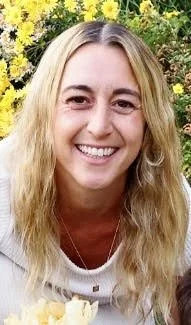
Jacquelyn LaRusso, MS, LPC
About the Author: Jacquelyn 'Jacki’ LaRusso is a Licensed Professional Counselor in private practice in Washington, DC. She runs a group practice, Rae Wellness LLC, with a team of clinicians who treat eating disorders and trauma. Jacki specializes in treatment of eating disorders, self-harm, and PTSD. Jacki is passionate about education, supervision, and treatment on the intersection of severe and enduring eating disorders and attachment trauma, and has created a niche in treating this specific population with effective outcomes. Jacki lives in Washington DC with her two children and dog. In her free time, Jacki likes hanging out with family and friends, listening to podcasts and audio books, and being outside on sunny days, especially when visiting where she grew up on the Jersey Shore beaches.