
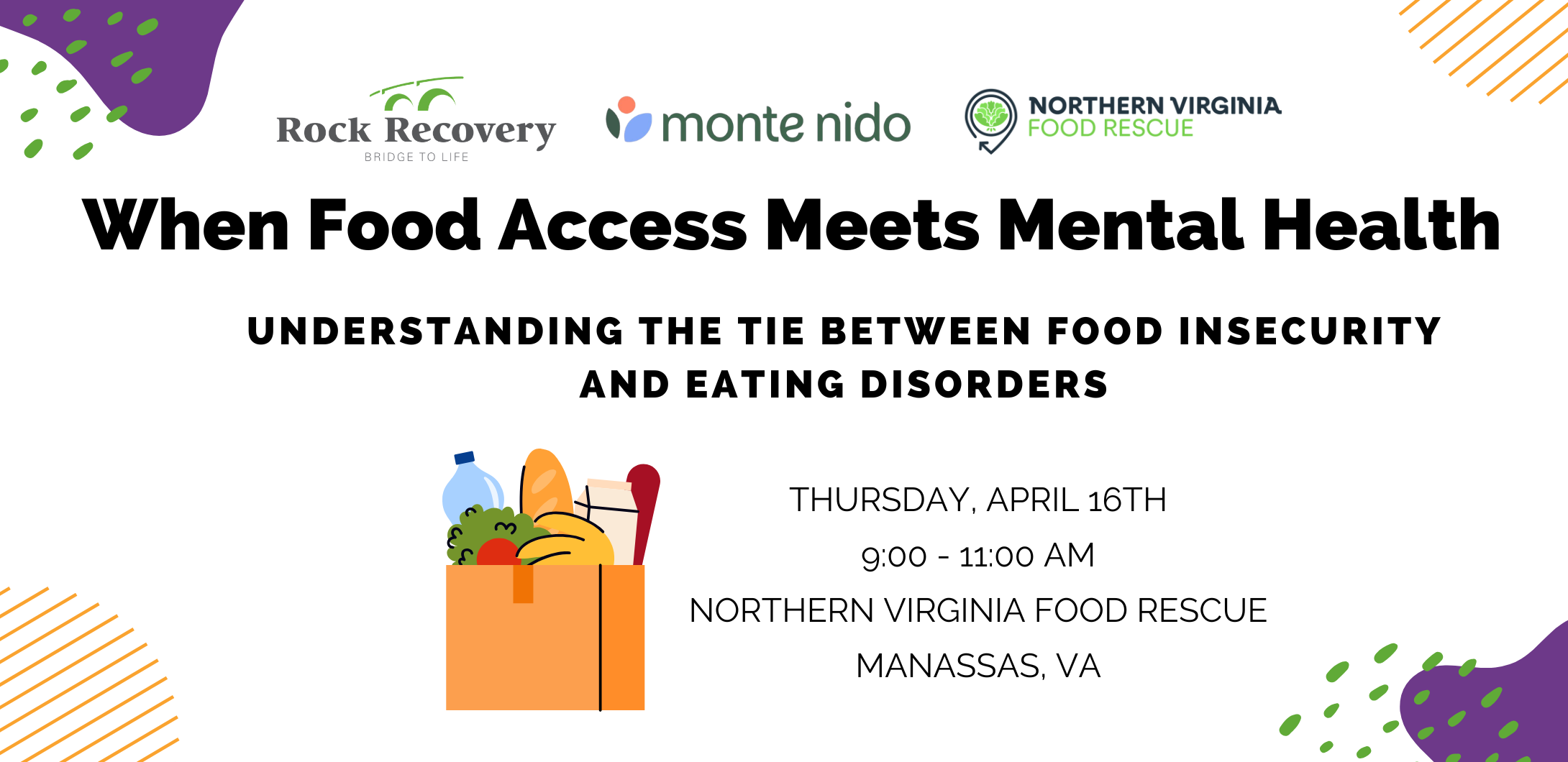
Join Rock Recovery and the Northern Virginia Food Rescue for a panel and networking breakfast to learn about the critical link between food access, mental health, and eating disorders—and how cross-sector collaboration can remove critical barriers to recovery.
Eating disorders are often misunderstood as conditions rooted only in body image. In reality, access to food, economic stability, and systemic inequities can significantly shape a person’s relationship with food, their risk of developing disordered eating, and their ability to access care.
Join us for a morning of learning, conversation, and connection as we explore the intersection of food access, mental health, and eating disorders. This event will bring together community stakeholders and mental health providers to better understand how barriers to food access can lead to disordered eating patterns.
The morning will begin with breakfast and networking, followed by a tour of Northern Virginia Food Rescue to learn more about the organization’s work addressing food access in our region. Participants will then hear from an expert panel featuring professionals within the food access and eating disorder spaces, as well as lived experience perspectives. Following the event, there will be an open Q&A.
Together, we will explore how communities can work toward more equitable access to food and eating disorder care, and how cross-sector partnerships can strengthen prevention, early intervention, and recovery.
Panelists
Dr. Megan Franco, Northern Virginia Food Rescue
Emilee Young, RDN, LD, Embrace Nutrition Counseling
Johanna Concepcion, LCSW, Monte Nido Treatment Center
Shandree McNatt, MPH, Rock Recovery
Learning Objectives
By attending this event, participants will be able to:
Understand the relationship between food access and disordered eating, including how food insecurity can impact eating behaviors and recovery outcomes.
Recognize systemic barriers that limit access to both a variety of food and eating disorder treatment, particularly for historically marginalized communities.
Identify opportunities for collaboration between mental health providers, nutrition professionals, and food access organizations to better support the community.