
Anorexia Within Men: A Recovery Story
Blog Post by Contributing Editor Nick Molliconi
It was not until recently that I decided to let people know that I had an eating disorder (ED) when I was an 8-year-old boy. I had buried it as something from my past and something that I no longer had, but it was not until I had a loved one go through almost identical symptoms as I did that, I realized I never fully addressed it. I even began to see how my eating disorder had morphed during my twenties and into where I am today. I consider myself a recovered man who had an eating disorder, but I am very aware of things that still trigger me, which, as a grown adult, I have been able to navigate effectively.
This is my very first blog post. Ever. I am honored to share my story to bring additional awareness and provide hope to all, especially men and boys who have, or have had, an eating disorder.
We Are Moving To San Diego
It was 1980, and I was about to go into the fifth grade when my father was transferred for his job to San Diego. It was a great career opportunity for him, and we all thought this would be a great adventure. What was most traumatic for me was adjusting to a new school and making new friends. Well, friends never happened. As a matter of fact, I became withdrawn, shy, and extremely sad. Lunches were outside, and I remember hiding against the wall so that no one would interact with me. It was not long thereafter that the symptoms began. I became focused on my weight with frequent scale checks. I became obsessed with how I looked, and I felt overweight. I remember only eating a few crackers for lunch, even though my mom packed a full lunch.
The Return To Denver
My entire family did not adjust well to San Diego, so my dad was transferred back to Denver, a year to the date from when we moved. My ED had progressed and taken hold of me, and neither I nor my family knew what we were dealing with. It was the early eighties, and even though there were treatment options, no one wanted to admit there was a problem. My self-confidence continued to spiral downward, and I had a very difficult time making friends and was severely bullied due to my small size. Entering the sixth grade, I weighed fifty-five pounds and was in the lower percentile of where a boy my age should be. My focus continued to be on limiting what I ate, and I had a system of only allowing five small items per day. If I had less, it was a success, and if I had more, I punished myself mentally.
My fixation on how I looked intensified. I remember constantly feeling my hip bones to ensure they were prominent and protruding. My ribs were visible, and I used to suck in my stomach because I felt overweight. I was very small compared to my peers, both in height and especially in weight. The bullying intensified. My grades suffered. I was in a bad place, physically and mentally. My parents were at a loss on what to do and coming to terms with their boy having an ED was difficult to accept. I did not get any formal treatment, as the options were limited, and it was unheard of for a boy to have an eating disorder, especially in the eighties, from what we were aware of.
The Recovery - Beginnings
From the fifth grade to the seventh grade, my anorexia continued to progress. Entering the eighth grade, I continued to struggle, and my dad decided to take a different approach than just saying, “just eat.” My dad spoke with the administration, and they agreed to allow me to join the wrestling team. Yes, the wrestling team. Of all sports to join, the one sport that is hyper-focused on how much you weigh. I was so small and, in wrestling language, “underweight” to even make the lowest weight class, which at that time was eighty-five pounds. The coach agreed to allow me to join the team. I watched my teammates struggle with “making weight” and do things to lose weight that I will not state here in my blog, as it may be too much for those reading.
Surprisingly, with the hyper-fixation of the sport on how much you weighed, I began to heal, slowly. As I reflect on my days on the wrestling team, which spanned from eighth grade to my senior year in high school, I began to address the issue of my weight and my anorexia. What I realized was that the team camaraderie, the physical exertion, and the competitive nature of the sport helped me start to regain my confidence, which, in turn, for me and my experience, began my healing and recovery. I am very grateful to my dad, the coach, and the administration for allowing me to join the team. I always wonder, if this did not happen, what would happen.
The Slow Recovery
I began to gain weight and reach a level that reassured my parents and me that this was over. It was not. I have always been on the shorter side in height and believe that my eating disorder had an impact on my maturity. In comparison to my peers, even in college, they were further ahead in their physical and mental development, and I have always felt behind in that aspect. The struggle with self-confidence has always been an issue. Even today, in my fifties, I have remnants of viewing myself as less than what is reality. I put my ED in the past and no longer viewed it as an issue, not realizing it impacted my mental state and had morphed into being hyper-focused on lifting weights and getting big. The focus on my mirror image was still present but had now changed to wanting to be muscular.
It was not until I had a loved one go through something similar that I realized it had changed, impacted on my mental health, and was still a part of me.
Today - Moving in the Direction of Healing
The biggest part of healing for me, after being on the wrestling team, was acknowledging to myself that my ED had a significant impact on my physical health and, for me, even more so on the mental aspects of life. I have been in therapy for over 10 years now, which focuses on my mental growth and healing. I am still aware of what I eat and make a very conscious effort to maintain a well-balanced nutrition plan that allows me to stay in a condition that would be considered great for a man in his fifties.
With Gratitude and Hope
I want to thank Rock Recovery for allowing me to share my story and thank all of you for reading my very first blog on something that is deeply personal, as it is for all of you. My hope is that this brings encouragement and resonates with you through my specific journey with anorexia.
My hope for the boys and men out there reading this is that, if you believe you struggle with body image, are focused on eating, and constantly compare yourself to your peers and how they look, please have the courage to reach out and ask for help. As men and boys, we struggle with not wanting to share something so personal, and we may even perceive asking for help or admitting you may have an eating disorder as a weakness. It is not a sign of weakness. Please, for your sake and for those who love you, ask for help.
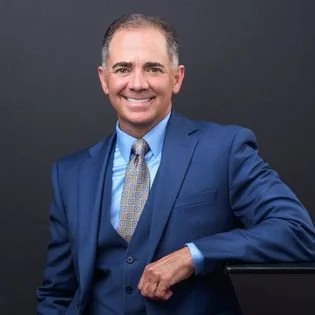
About the Author: Nick Molliconi is a data and AI executive, writer, and advocate who shares openly about resilience, recovery, and personal growth. Alongside a career leading enterprise data, analytics, and artificial intelligence initiatives, Nick has spent years reflecting on the deeper connection between mental health, identity, social influence, and healing while also raising two teenagers and navigating the realities of parenthood and life transitions. His faith is a core foundation in both his personal life and his approach to healing, resilience, and growth. His interest in eating disorder awareness began through both personal experience and academic research, including graduate work focused on the relationship between social networking and eating disorder prevalence. Though new to public writing, Nick believes authenticity and vulnerability matter more than perfection, and he hopes sharing his experiences can help others, especially men, feel less alone when discussing mental health, body image, and recovery. As part of that journey, he is beginning to speak more publicly, both personally and professionally, about resilience, mental health, leadership, identity, and the challenges many people silently carry while pursuing success and achievement. He believes healing is not linear, strength is found in vulnerability, and sharing our stories can help others feel less alone. His blog combines personal reflection, research, resilience, faith, and lived experience to encourage growth, authenticity, and hope.